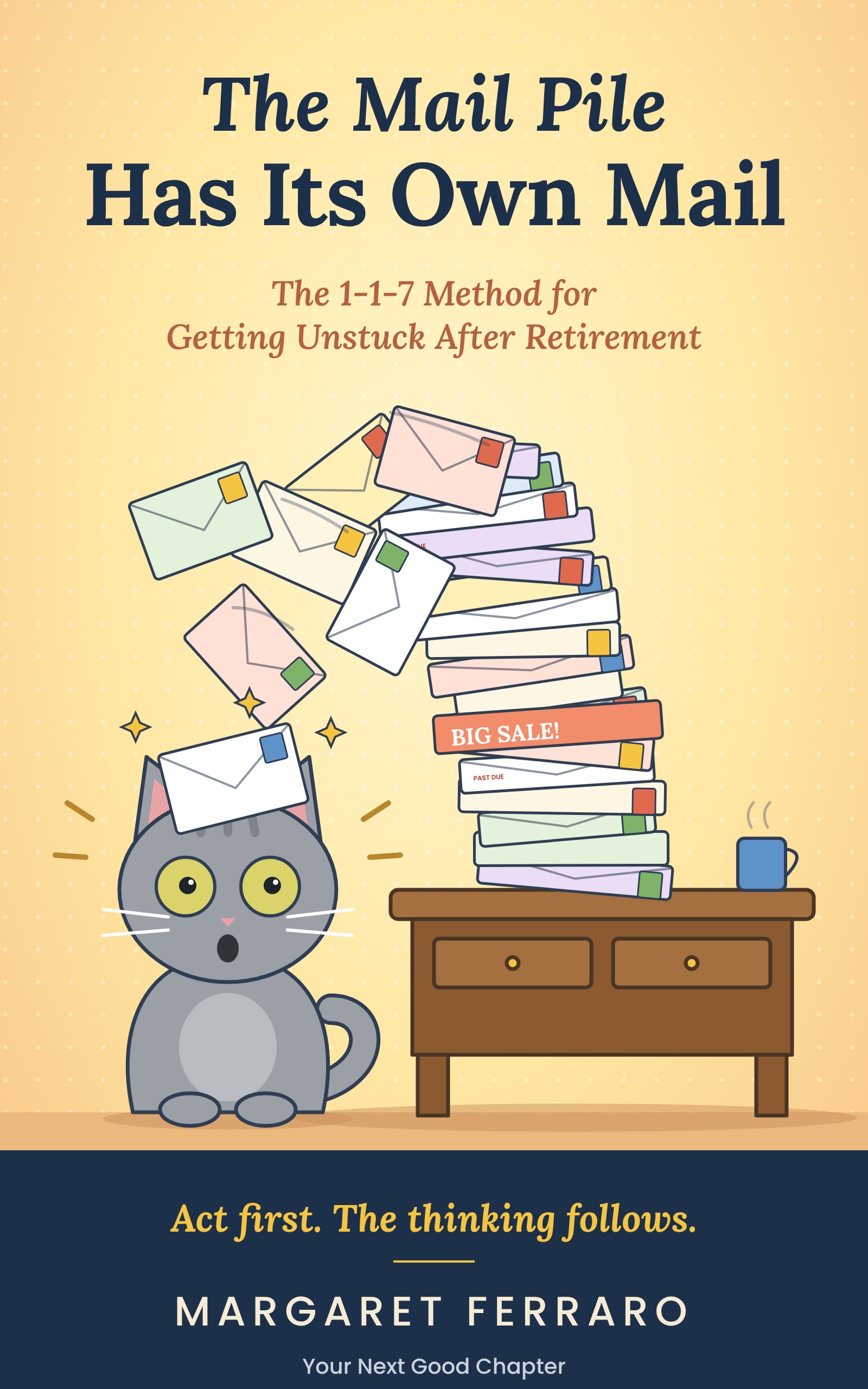
Is your mail pile getting its own mail?
The days blur together. The things you used to handle without thinking now feel strangely hard. And you keep wondering why.
You're not failing at retirement. You're adjusting to one of life's biggest changes, and that's more common than anyone admits.
Here's the good news: getting unstuck starts a lot smaller than you think.
See your two optionsThe book from $4.99 on Amazon
Or the Complete Program for $8
Who's behind this
About Me
Hi, I'm Margaret Ferraro, and I'm so glad you're here!
For 14 years in Maine, I helped older adults rebuild the everyday routines that bring structure, confidence, and purpose to life. As a Mental Health Rehabilitation Technician and case manager, I worked one-on-one with people in their 50s, 60s, and 70s, many navigating the transition into retirement or adjusting to a new season of life.
I hold a B.A. in Psychology and a graduate certificate in Mental Health Rehabilitation.
One lesson stayed with me: small, manageable steps can make a bigger difference than even the best-laid plans. That's where the 1-1-7 Method comes from. And when I retired and hit my own slump, it's what got me moving again.
You don't have to change everything at once. Sometimes, all it takes is one good next step.
Start building your next good chapter today!
Margaret
One small task. One honest reframe. Seven days.
you do every day, small enough to manage even on a tired day.
you write afterward, based on what actually happened, not on wishful thinking.
to show yourself, with real evidence, that a small first step can quiet the thought holding you back.
Act first. The thinking follows.
The heart of the method
Why this isn't positive thinking
Let's be plain about this. The 1-1-7 Method is not positive thinking, and it's not wishful thinking.
Positive thinking asks you to repeat something cheerful and hope you come to believe it. For someone who's already discouraged, that can backfire. In one study, people with low self-esteem who repeated an upbeat statement about themselves felt worse than those who didn't.
In my work as a case manager, I helped many clients who needed a little help getting their lives back on track. Here's what I found worked best.
Ben
Late sixties, living alone, a lifelong cook
By the time we met, most of the groceries Ben bought went uneaten.
So we picked one small thing: one simple cooked meal a day, for one week, with a quick check-in in his journal each evening. Seven evenings in a row, he wrote the same thing. He had made the meal, and he had enjoyed it.
Trudy
Late fifties, a lifelong knitter and painter
Her apartment had filled with supplies she was saving for someday, and she believed the clutter was why her daughters didn't bring the grandchildren to visit.
So we shrank the job to one room and only the things that could hurt a child, a little each day for one week. By day seven she had one safe room and every one of her craft supplies.
I was thrilled the first time I watched this work, and I never got tired of it. Ben was proud of himself. Trudy was planning a visit with her grandchildren. Both of them felt encouraged, and they had every right to, because they had done something real first.
Positive thinking asks you to believe something.
Action gives you a chance to discover something.
Names and details changed to protect privacy.
Two ways to start
Pick the version that suits you
Just the book
$4.99 Kindle · $12.99 paperback
- The Mail Pile Has Its Own Mail: the whole 1-1-7 Method
- The 7-Day Journal, built right in
Click here for your free Starter Kit
Find it on AmazonThe Complete 1-1-7 Program
$8 instant download, yours to keep
- The Guide (the whole book, as a download)
- Beyond Week One: keep it going after the first week
- Two extra journals: one to print, one to fill in on screen
- The Starter Kit: printables to help you stay on track
- Three check-in emails from me, at week 1, week 3 and week 6
The research
Why act first?
The 1-1-7 Method is built on behavioral activation, an approach therapists have used for decades. You don't wait until you feel ready. You take one small action and let your mood catch up!
It's one of the most tested approaches in psychology. A 2014 review of 26 clinical trials found it effective for depression.
It has also been tested with older adults using nothing more than a self-help workbook. In a UK trial, the workbook cut the number of people who developed depression-level symptoms by about a fifth at the four-month mark. The effect faded after a year, which is why this program doesn't stop at week one.
The 1-1-7 Method was not part of these studies, and it is not a treatment. It takes the same principle and applies it to everyday life after retirement. Ekers D, et al. PLoS ONE. 2014; 9(6): e100100. Gilbody S, et al. American Journal of Geriatric Psychiatry. 2022; 30(2): 197-207.
What a week of evidence looks like
- Day 1I did it.
- Day 2I did it.
- Day 3I did it.
- Day 4I did it.
- Day 5I did it.
- Day 6I did it.
- Day 7I did it.
Now look back at the thought that stopped you. Is it still completely true?
Recommended
Get The Complete 1-1-7 Program · $8
Here's what's inside.
The Guide
The whole 1-1-7 Method
- Why retirement can feel hard
- A quiz to find where to start
- The method, step by step
- The 7-Day Journal, built in
Beyond Week One
Keep it going
- What to do after week one
- A reset for off weeks
- Monthly check-ins
- Ideas for what comes next
The Starter Kit
Free for everyone
- Meals
- Your people
- Doctor visits
- Getting outside
- Calls and paperwork
- Pocket settling cards

Meet Walter
"Walter here. I pop up all through the book with my opinions. Nobody asked for them. You're getting them anyway."
Walter's Take:"I read the book. Well, I sat on it. Same thing."
More from the Your Next Good Chapter series
Ready for your next small step?
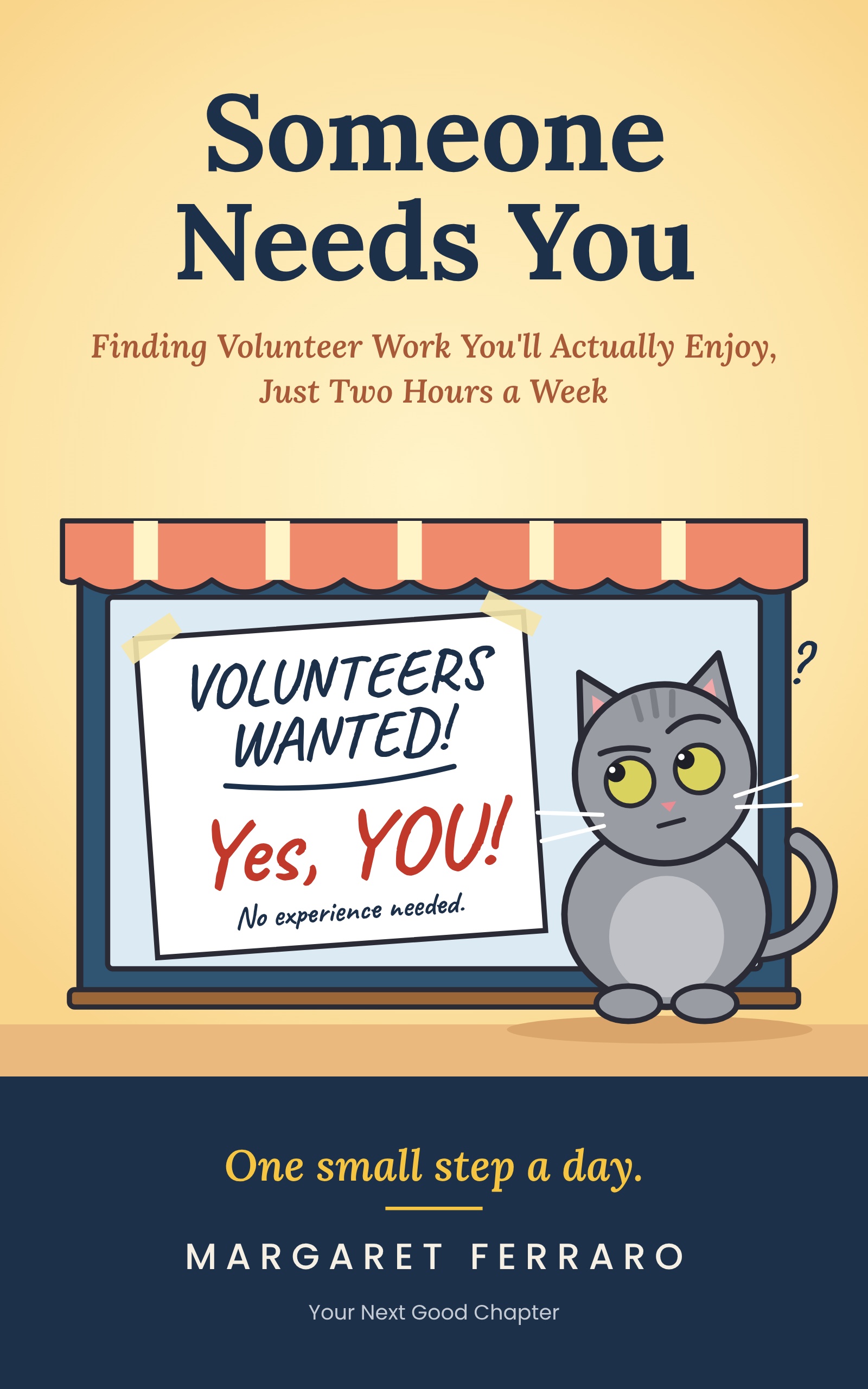
Someone Needs You
Finding volunteer work you'll actually enjoy, just two hours a week. A 14-day path, one small step a day.
See the book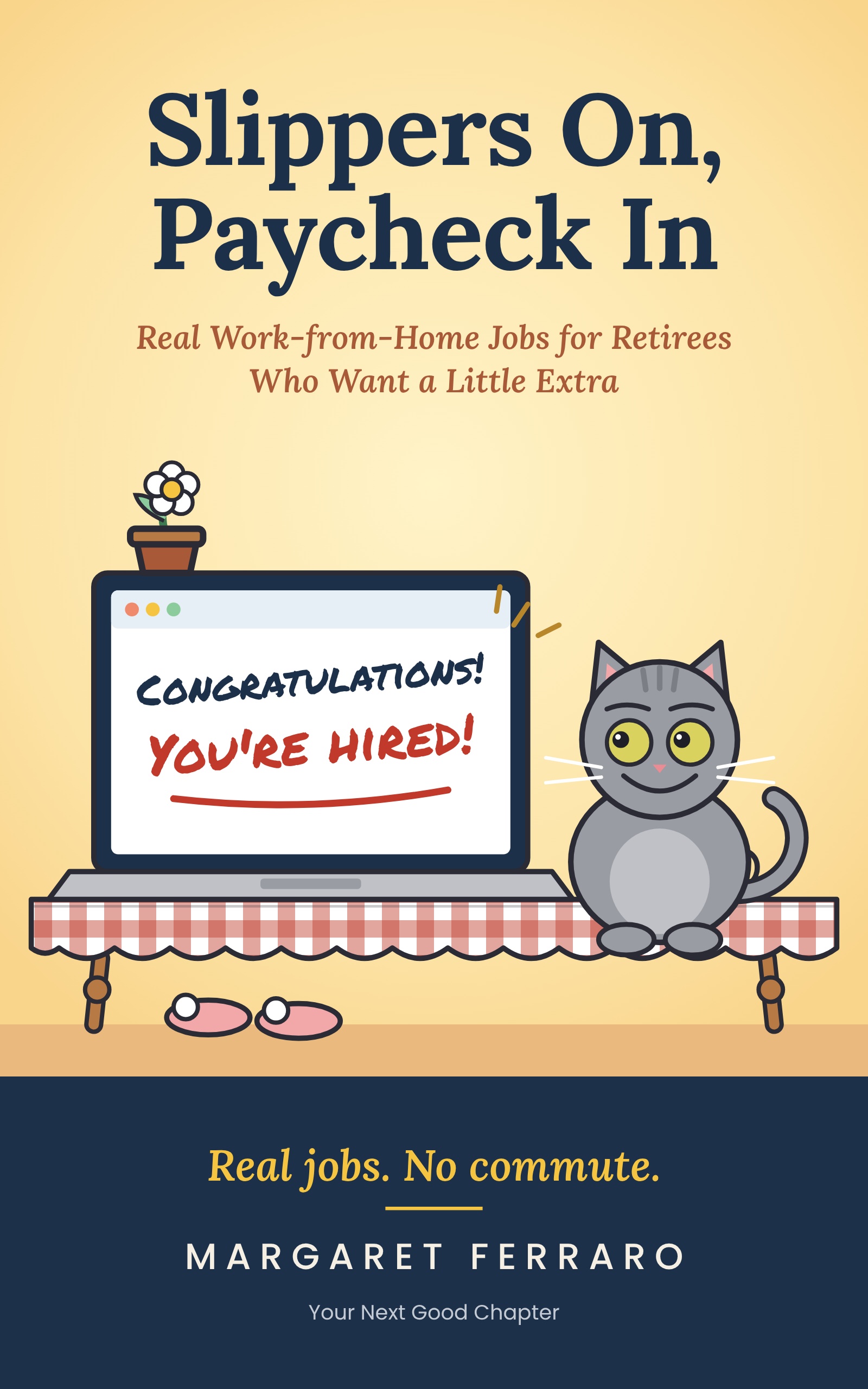
Slippers On, Paycheck In
Real work-from-home jobs for retirees who want a little extra, plus how to spot a scam in seconds.
See the book